
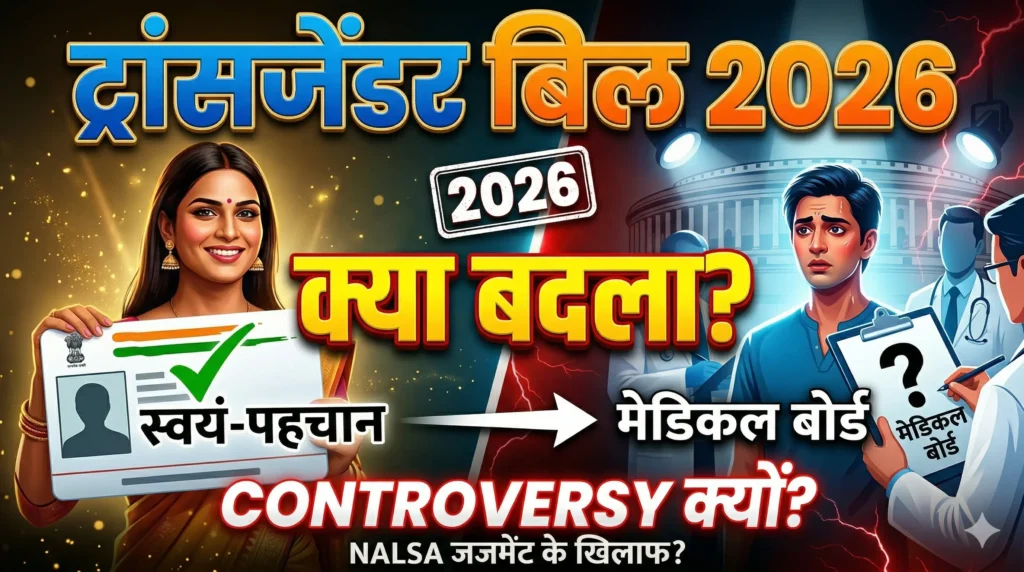
March 2026 mein Indian Parliament ne ek aisa bill pass kiya jisne poore desh mein debate chhed di. Supporters keh rahe hain yeh transgender community ki protection ke liye zaroori hai. Critics keh rahe hain yeh Supreme Court ke landmark NALSA judgment ko ulta kar raha hai.
Also Read https://duocounsel.com/dark-web-kya-hai/
Hum baat kar rahe hain Transgender Bill 2026 ki — yaani Transgender Persons (Protection of Rights) Amendment Bill, 2026.
Yeh bill 13 March 2026 ko Lok Sabha mein introduce hua, 25 March ko pass hua, 26 March ko Rajya Sabha se bhi pass ho gaya, aur President Droupadi Murmu ne ise sign karke law bana diya. Sirf 13 din mein — introduction se President assent tak.
Aur controversy? UN Human Rights ne concern express kiya. Amnesty International ne ise “major step backward” kaha. Human Rights Watch ne warning di. National Council for Transgender Persons ke 2 members ne resign kar diya. 140 lawyers ne President ko letter likha.
Toh aakhir Transgender Bill 2026 mein aisa kya badla ki itna halla macha? Main ek practicing advocate hoon aur is article mein main aapko neutral, factual tarike se samjhaunga — kya tha purana law, kya hai naya, kya badla, government ka argument kya hai, opposition ka argument kya hai, aur legally iska kya impact padega.
Quick Answer: Transgender Bill 2026 ne 2019 Act mein major changes kiye hain — self-identification ka right hata diya, medical board certification mandatory ki, definition narrow karke trans men aur genderqueer ko exclude kiya, aur naye criminal offences add kiye. Government kehti hai yeh forced conversion se protect karega. Critics kehte hain yeh NALSA judgment ka violation hai aur transgender community ke fundamental rights chhin raha hai. Kerala HC aur Supreme Court mein challenges pending hain.
Background — NALSA Judgment Se Lekar 2019 Act Tak Ka Safar
Transgender Bill 2026 ko samajhne ke liye pehle yeh jaanna zaroori hai ki India mein transgender rights ka legal journey kya raha hai.
2014: NALSA Judgment — Watershed Moment
National Legal Services Authority (NALSA) vs Union of India — Supreme Court ka yeh landmark judgment tha jisne:
- Transgender persons ko “third gender” ke roop mein legally recognize kiya
- Kaha ki gender identity self-determination ka part hai — Article 21 (Right to Life) ke under
- Kaha ki koi medical test ya surgery identity recognition ki condition nahi ban sakti
- Government ko direction diya ki transgender community ko socially and educationally backward class maane aur reservation de
Yeh judgment bahut progressive tha — duniya bhar mein iske liye India ki tarif hui.
2019: Transgender Persons (Protection of Rights) Act
NALSA ke 5 saal baad government ne yeh Act banaya. Lekin activists ne tab bhi criticize kiya tha kyunki:
- Self-identification ke liye District Magistrate se certificate lena padta tha (NALSA ne bola tha self-declaration kaafi hai)
- Male ya female ke roop mein recognition ke liye surgery ka proof maangta tha
- Reservation ka koi provision nahi tha
Phir bhi, 2019 Act mein ek broad definition thi — trans men, trans women, genderqueer, intersex, hijra, kinner — sab included the. Aur Section 4(2) mein self-perceived gender identity ka right tha.
2026: Amendment Bill — Sab Badal Gaya
Ab aata hai Transgender Bill 2026 — jisne 2019 Act mein fundamental changes kar diye.

Kya Badla — Transgender Bill 2026 Ke 7 Major Changes
Change 1: Self-Identification Ka Right Hata Diya (Sabse Bada Change)
Pehle (2019 Act): Section 4(2) mein likha tha — “A person recognised as transgender shall have a right to self-perceived gender identity.”
Ab (2026 Amendment): Section 4(2) poora delete kar diya gaya. Ab self-perceived gender identity ka koi statutory right nahi hai.
Yeh Transgender Bill 2026 ka sabse controversial change hai. NALSA judgment ne 2014 mein kaha tha ki self-determination fundamental right hai. Ab 2026 ka law ise hata raha hai.
Change 2: Definition Narrow Ho Gayi
Pehle: “Transgender person” ka matlab tha — koi bhi jiska gender birth pe assigned gender se match nahi karta. Trans men, trans women, genderqueer, intersex — sab included.
Ab: Specific categories list ki gayi hain:
- Hijra, kinner, aravani, jogta jaise socio-cultural groups
- Intersex persons (biological variations wale)
- Eunuch
- Woh log jinhe force karke transgender identity di gayi (mutilation, castration ke through)
Kya hata diya:
- Trans men
- Trans women (agar socio-cultural category mein nahi aate)
- Genderqueer / non-binary persons
Change 3: Medical Board Certification Mandatory
Pehle: District Magistrate se certificate milta tha — relatively simpler process.
Ab: Ek government-appointed medical board (Chief Medical Officer ya Deputy CMO headed) aapki identity verify karegi. Board ki recommendation ke baad hi DM certificate issue karega. DM additional medical experts se bhi opinion le sakta hai.
Matlab — aapki gender identity ab doctors decide karenge, aap nahi.
Change 4: Surgery Ki Information Government Ko Jaayegi
Naya provision: Agar koi transgender person gender-affirming surgery karwata hai, toh hospital ko yeh information District Magistrate ko report karni hogi.
Critics kehte hain yeh right to privacy (Puttaswamy judgment, 2017) ka violation hai — ek private medical procedure ki jaankari government official ko kyun jaaye?
Change 5: Trans Men Aur Non-Binary Ka Explicit Exclusion
Bill mein specifically likha hai ki yeh Act persons with “different sexual orientations and self-perceived sexual identities” ko include nahi karega aur “kabhi include nahi karta tha” (retrospective exclusion).
Yeh language bahut unusual hai — kyunki 2019 Act mein trans men aur genderqueer explicitly included the. Ab bill keh raha hai ki woh “kabhi included nahi the.”
Change 6: Naye Criminal Offences — Stricter Punishment
Transgender Bill 2026 ne kuch naye serious offences add kiye hain:
| Offence | Punishment |
|---|---|
| Kidnapping + grievous hurt to force transgender identity (adult) | 10 saal se life imprisonment + Rs 2 lakh fine |
| Same offence (child victim) | Life imprisonment + Rs 5 lakh fine |
| Forcing someone to present as transgender for begging/bonded labour (adult) | 5-10 saal + Rs 1 lakh fine |
| Same offence (child victim) | 10-14 saal + Rs 3 lakh fine |
Government ka argument hai ki yeh provisions forced conversion aur trafficking se protect karte hain. Critics kehte hain ki yeh provisions traditional hijra guru-chela system ko criminalize kar sakte hain — jo centuries se transgender community ka kinship structure raha hai.
Change 7: Birth Certificate Mein Naam Change Ka Right
Positive change: Ab transgender persons birth certificate aur official documents mein first name change kara sakte hain identity certificate ke basis pe. Yeh pehle explicitly nahi tha.
Government Ka Argument — Bill Kyun Zaroori Hai?
Fair analysis ke liye government ki position bhi samajhna zaroori hai. Union Minister Virendra Kumar ne Parliament mein kaha:
1. Forced conversion se protection: Government ka kehna hai ki bahut se log — especially minors — ko forcefully transgender identity mein push kiya jaata hai, emasculation ya castration ke through. Naye criminal provisions isse rokenge.
2. Misuse prevention: Government kehti hai ki self-identification ka provision misuse ho sakta hai — koi bhi bina genuine basis ke transgender identity claim karke benefits le sakta tha.
3. Medical verification ensures genuineness: Medical board se certification se ensure hoga ki sirf genuine transgender persons ko certificate mile.
4. Stricter punishment: Purane law mein offences ke liye sirf 6 months – 2 saal ki saza thi — bahut kam. Naye provisions mein 10 saal se life imprisonment tak hai.
Critics Ka Argument — Bill Problematic Kyun Hai?
Doosri taraf, transgender community, activists, lawyers aur international organizations ka kehna hai:
1. NALSA judgment ka direct violation: Supreme Court ne 2014 mein kaha tha ki self-determination fundamental right hai aur koi medical test condition nahi ban sakti. Transgender Bill 2026 dono ko ulta kar raha hai.
2. Trans men aur non-binary ka erasure: Bill definition narrow karke lakho logo ko legal recognition se bahar kar raha hai. Census 2011 ke mutaabik India mein 4.87 lakh transgender persons record hue the — actual number kahin zyada hai.
3. Medical gatekeeping: Gender identity ko doctors ke hawaale karna dignity aur autonomy ka violation hai. World Health Organization ne bhi 2019 mein transgenderism ko mental disorders ki list se hataya tha.
4. Privacy violation: Surgery ki information DM ko report karna Puttaswamy judgment (right to privacy) ke against hai.
5. Guru-chela system criminalization: Naye criminal provisions se traditional hijra gharana system — jo centuries se community ka support structure raha hai — ko target kiya ja sakta hai.
6. No consultation: National Council for Transgender Persons ke 2 members — Rituparna Neog aur Kalki Subramaniam — ne resign kiya. Supreme Court-appointed committee ne bhi bill withdraw karne ko kaha tha. Government ne ignore kiya.
7. Speed of passage: 13 din mein bill introduce se President assent tak — itne sensitive topic pe adequate debate nahi hua.
<!– Image Suggestion: Two-column comparison — “Government Says” vs “Critics Say” with key arguments –> <!– Alt Text: Transgender Bill 2026 government vs critics arguments comparison India –>
Legal Challenges — Courts Mein Kya Ho Raha Hai?
Transgender Bill 2026 ke against already legal challenges shuru ho gaye hain:
1. Kerala High Court: Ek transwoman ne petition file ki hai — kehti hai uska transgender ID card tha, ab naye law ke under uski identity question mein hai. Self-identification ko fundamental right declare karne ki maang ki hai.
2. Supreme Court: Ek aur petition pending hai. 2019 Act ke against bhi pehle se challenges pending the — ab 2026 amendment ke challenges bhi add ho gaye hain.
3. 140 Lawyers’ Letter: 140 se zyada lawyers aur feminists ne President Murmu ko letter likha tha — bill pe assent na dein, yeh constitutional violations hai. Lekin President ne sign kar diya.
Key constitutional questions:
- Kya self-identification hataana Article 21 (Right to Life & Personal Liberty) ka violation hai?
- Kya medical certification mandatory karna Article 14 (Right to Equality) ka violation hai?
- Kya surgery report karna Article 21 ke under right to privacy ka violation hai?
- Kya retrospective exclusion (“kabhi included nahi the”) Article 13 (laws inconsistent with fundamental rights void) ka violation hai?
Advocate’s Note: NALSA judgment Supreme Court ka hai — Parliament ka Act Supreme Court ke judgment ko override nahi kar sakta jab tak constitutional amendment na ho. Yeh bill ordinary amendment hai, constitutional amendment nahi. Isliye courts ke saamne yeh argument strong hai ki Transgender Bill 2026 NALSA ke against hone ke kaaran unconstitutional hai.
2019 Act vs 2026 Amendment — Quick Comparison Table
| Parameter | 2019 Act | 2026 Amendment |
|---|---|---|
| Definition | Broad — trans men, trans women, genderqueer, intersex, hijra sab | Narrow — specific socio-cultural groups + intersex + forced identity |
| Self-identification | Section 4(2) — self-perceived gender identity ka right | Section 4(2) deleted — koi self-ID right nahi |
| Certification | District Magistrate se certificate | Medical board recommendation + DM approval |
| Trans men included? | Haan, explicitly | Nahi, excluded |
| Genderqueer included? | Haan | Nahi, excluded |
| Surgery reporting | Nahi | Hospital ko DM ko inform karna mandatory |
| Punishment range | 6 months – 2 years | 5 years – life imprisonment (naye offences) |
| Name change in documents | Not explicit | Allowed with identity certificate |
Aam Insaan Pe Kya Impact Padega?
Agar aap transgender community ke member hain ya aapka koi jaanne wala hai, toh Transgender Bill 2026 ka practical impact samajhna zaroori hai:
1. Existing ID card holders: Jinke paas pehle se transgender identity card hai — unki status ab uncertain hai. Naye law ke under kya unhe dobara medical board se verify karwana padega? Yeh clarity abhi nahi hai.
2. Trans men aur non-binary: Agar aap trans man ya genderqueer hain toh naye law ke under aapki category hi exist nahi karti. Aap legally “transgender” nahi mane jaoge.
3. Medical board process: Certificate ke liye ab medical board ke saamne jaana padega. Yeh process kitna time lega, kitna accessible hoga, kya privacy maintain hogi — sab unclear hai.
4. Shelter homes aur support networks: Traditional hijra gharana system ke under jo community support tha, woh naye criminal provisions se risk mein hai.
5. Mental health impact: Kerala HC petition mein petitioner ne likha — “community members are experiencing severe psychological distress, including suicidal ideation.”
FAQ — Transgender Bill 2026 Ke Baare Mein Common Questions
Q: Transgender Bill 2026 kab pass hua aur kab law bana? A: Bill 13 March 2026 ko Lok Sabha mein introduce hua, 25 March ko pass hua, 26 March ko Rajya Sabha se pass hua, aur President ne March-end mein sign karke law bana diya. Total time — sirf 13 din.
Q: Kya self-identification ka right poora khatam ho gaya hai? A: Haan, Section 4(2) jo “self-perceived gender identity” ka right deta tha, woh delete kar diya gaya hai. Ab medical board certification mandatory hai. Lekin courts mein challenges pending hain — NALSA judgment abhi bhi binding precedent hai.
Q: Kya trans men ab legally transgender nahi maane jaayenge? A: Naye law ke text ke mutaabik — trans men aur genderqueer explicitly exclude kiye gaye hain. Bill kehta hai ki yeh categories “kabhi included nahi thi.” Yeh bahut contested point hai aur court mein challenge hoga.
Q: Government ke hisaab se yeh bill kyun zaroori hai? A: Government ka kehna hai ki yeh bill forced conversion, trafficking aur minors ke exploitation se protect karega. Naye criminal provisions mein life imprisonment tak ki saza hai.
Q: Kya Transgender Bill 2026 Supreme Court mein challenge hoga? A: Already ho raha hai. Kerala HC mein petition file ho chuki hai. Supreme Court mein bhi challenge pending hai. Legal experts kehte hain ki NALSA judgment ke against hone ke kaaran bill constitutionally vulnerable hai.
Q: International community ka kya reaction hai? A: UN Human Rights ne “concern” express kiya. Amnesty International ne “major step backward” kaha. Human Rights Watch ne ise “huge setback” bataya. Sab ne self-identification hataane aur medical certification mandatory karne ki criticism ki hai.
Q: Kya yeh bill transgender community ke favour mein kuch bhi positive karta hai? A: Haan — birth certificate mein naam change ka explicit right diya hai. Aur forced conversion ke against stricter punishment (life imprisonment tak) add kiye hain. Lekin overall, community ka kehna hai ki negative changes positive se kahin zyada hain.
Yeh Debate Khatam Nahi Hui — Abhi Shuru Hui Hai
Transgender Bill 2026 Indian law ke sabse debated topics mein se ek ban gaya hai. Government kehti hai protection, community kehti hai erasure. Parliament ne pass kiya, courts mein challenge ho raha hai.
Kuch key points yaad rakhein:
- NALSA judgment (2014) ne self-identification ko fundamental right kaha tha — Transgender Bill 2026 ne woh hata diya
- Trans men, genderqueer aur non-binary ab naye law ki definition mein nahi aate
- Medical board certification mandatory ho gayi — doctor decide karega ki aap transgender hain ya nahi
- Naye criminal provisions forced conversion ke against hain — but traditional community structures ko bhi risk mein daal sakte hain
- Kerala HC aur Supreme Court mein constitutional challenges pending hain
- 140+ lawyers, UN, Amnesty, HRW — sab ne concern raise kiya hai
About the Author
Adv. Barkha Jain DuoCounsel.com ki Co-Founder aur practicing advocate hain jo Gurugram courts mein active practice karti hain.
Barkha ki primary specialization Corporate Law, Business Compliance aur Commercial Disputes mein hai. Woh startups, SMEs aur established companies ko company incorporation, regulatory compliance, shareholder agreements, mergers & acquisitions, contract drafting, partnership deeds aur commercial litigation mein legal guidance deti hain. Companies Act 2013, LLP Act, FEMA aur corporate governance frameworks ke practical application mein unka hands-on experience hai.
DuoCounsel Podcast ki co-host ke roop mein, Barkha aur co-founder Adv. Yogesh Kumar milke complex legal topics ko simple Hinglish mein samjhate hain — taaki law sirf lawyers ki bhasha na rahe, balki har entrepreneur, business owner aur aam insaan apne legal rights samajh sake.
Credentials:
- Bar Council of Punjab & Haryana
- Practice: Gurugram District Courts
- Specialization: Corporate Law, Business Compliance, Commercial Disputes, Contract Drafting, Startup Advisory
- Platform: DuoCounsel.com | DuoCounsel Podcast
🎙️ Podcast: duocounsel.com/podcast ▶️ YouTube: youtube.com/@duocounsel 📸 Instagram: instagram.com/duocounsel
Disclaimer: Yeh article sirf legal awareness ke liye hai. Ise professional legal advice nahi maana jaana chahiye. Apne case ke liye kisi advocate se zaroor consult karein.