
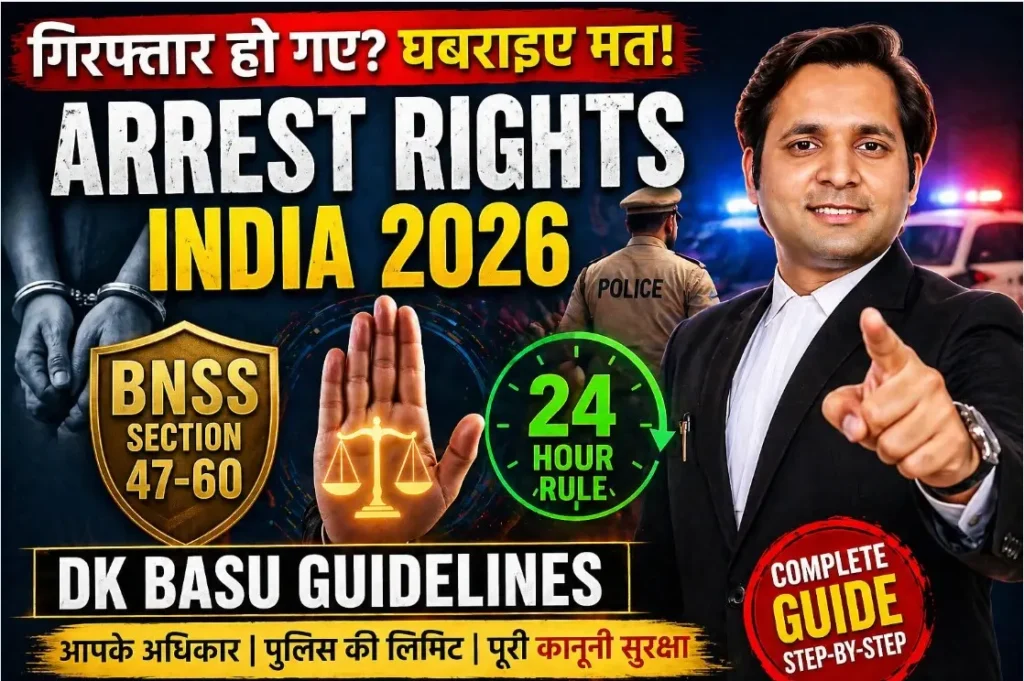
Subah 6 baje darwaza khula — 4 constables saamne. “Chalo thane.” Koi warrant nahi dikhaya. Koi reason nahi bataya. Phone nahi karne diya family ko. Haath pakadte hue jeep mein daala. Thane mein 2 din raha — bina magistrate ke saamne pesh hue. Darr, confusion, aur akela feel karna — yeh India mein illegal arrest ki reality hai.
Lekin yeh gaib baat hai — aapke arrest rights itne strong hain ki police ka yeh har step unconstitutional aur illegal tha. BNSS Sections 47-60, Constitution Articles 20-22, DK Basu guidelines — inhe jan liya hota toh ussi waqt police ko rok sakte the.
Main ek practicing advocate hoon aur Gurugram courts mein criminal cases regularly handle karta hoon. Meri client ki sabse common complaint hai — “Mujhe arrest ke waqt kuch pata hi nahi tha — kya bolein, kya karein, kya rights hain.” Is anjaan ki wajah se police arrest rights ka dhadalle se violation karti hai — kyunki unhe pata hai public ko pata nahi.
Is complete article mein main aapko arrest rights ke baare mein sab kuch bataunga — BNSS Sections 47-60 section-by-section, DK Basu ke 11 mandatory guidelines, 24-hour magistrate rule, lawyer ka right, medical examination, women ke special protections, aur agar kisi ne arrest rights violate kiye toh kya legal action le sakte hain.
Quick Answer: India mein aapke arrest rights — (1) Arrest ka reason jaanne ka haq (BNSS Section 47); (2) Family ko turant inform karne ka haq (BNSS Section 48); (3) Advocate se milne ka haq (BNSS Section 38); (4) Medical examination ka haq (BNSS Section 51); (5) Arrest memo dekhne ka haq (BNSS Section 46 — DK Basu); (6) 24 ghante mein magistrate ke saamne pesh hona mandatory (BNSS Section 58, Article 22(2)); (7) Self-incrimination se protection — aap kuch bolne ke liye forced nahi ho sakte (Article 20(3)). Koi bhi police officer in rights ko violate kare toh High Court mein Habeas Corpus aur compensation claim karo
Also Read:- Juvenile Crime India 2026 — Minor Ne Crime Kiya Toh Kya Hoga, BNS, JJ Act Aur Parents Ki Liability
Constitutional Foundation — Arrest Rights Ka Aadhaar
Arrest rights ki neenv India ke Constitution mein hai. Teen articles directly relevant hain:
Article 21 — Right to Life and Personal Liberty
“No person shall be deprived of his life or personal liberty except according to procedure established by law.”
Supreme Court ne Maneka Gandhi v. Union of India (1978) mein expand kiya — yeh “procedure” fair, just aur reasonable hona chahiye. Arbitrary, oppressive procedure = Article 21 violation.
Matlab — arrest rights Constitution ki guarantee hai, sirf statutory right nahi.
Article 22 — Rights On Arrest
Specifically arrest rights ke baare mein:
Article 22(1):
- Right to be informed of grounds of arrest
- Right to consult and be defended by legal practitioner of choice
Article 22(2):
- 24 ghante ke andar nearest magistrate ke saamne production mandatory
- Excluding travel time
Article 22(3): Enemy aliens aur persons under preventive detention laws ke liye limited exceptions.
Article 20 — Protections In Prosecution
- (1) Ex-post-facto laws se protection
- (2) Double jeopardy — ek offence ke liye ek baar hi trial
- (3) No self-incrimination — accused ko apne against witness banne pe force nahi kar sakte
BNSS Sections 47-60 — Arrest Rights Ka Complete Breakdown
Bharatiya Nagarik Suraksha Sanhita (BNSS) 2023 — July 1, 2024 se effective — ne CrPC replace kiya. Chapter V (Sections 35-66) arrest procedure cover karta hai. Key arrest rights sections:
BNSS Section 46 — Arrest Memo (DK Basu Implementation)
- Arresting officer visible identification — naam ka badge clearly show karna
- Arrest memo taiyar karna mandatory:
- Arrest ka time aur date
- Offence details
- Place of arrest
- Attested by family member ya local respectable person
- Countersigned by arrested person
- 2026 addition: Digital/electronic arrest memo — WhatsApp ya email pe bhi family ko send karna accepted practice
BNSS Section 47 — Grounds Of Arrest Batana Mandatory
- Police ko full particulars of offence ya grounds of arrest clear batane mandatory hain
- Warrant arrest mein: Warrant show karna aur copy dena
- Without warrant arrest mein: Verbal explanation mandatory
- Bailable offence mein: Accused ko immediately inform karo ki bail ka haq hai aur surety arrange kar sakte ho
Recent SC update (2024-25): Supreme Court ne clarify kiya — sirf arrest memo dena kaafi nahi. Orally bhi grounds explain karna zaroori hai (arrest rights violation agar sirf paper de diya aur verbally explain nahi kiya).
BNSS Section 48 — Family Ko Inform Karna
- Arrested person ke family member, relative, ya nominated friend ko turant inform karna officer ka duty
- Officer ko yeh haq batana bhi duty hai — “Aap kisi ek ko inform karwa sakte hain”
- 2026 update: Digital notification — WhatsApp message, email — acceptable hai
Practical right: Agar police family ko nahi batati — yeh arrest rights ka violation hai aur bail application mein ground ban sakta hai.
BNSS Section 51 — Medical Examination
Do important rights:
Arrested person ka right:
- Medical examination karwa sakta hai
- Particularly jab injuries visible ho ya torture ka darr ho
- Evidence ke liye bhi critical — agar false case hai toh body pe koi injury nahi milegi
Woman accused ka additional right:
- Medical examination sirf female medical practitioner karegi
- No male doctor for female accused
BNSS Section 53 — Police Ka Duty Medical Examination Karne Ka
- Police ko arrested person ka medical examination karwana hoga agar:
- Investigation mein medical evidence useful ho
- Or accused ka health deteriorate ho
- Khatri v. State of Bihar (1981): Medical examination se denial = Article 21 violation
BNSS Section 56 — Health Aur Safety Ka Haq
- Arrested person ki health aur safety ki responsibility custodian ki (police/jail)
- Cruel, inhuman ya degrading treatment prohibited
- BNSS Section 56 + Article 21 combined = strongest protection against custodial torture
DK Basu guidelines bhi yahi implement karti hain — Section 56 unhe statutory force deta hai.
BNSS Section 58 — 24-Hour Rule (MOST IMPORTANT)
“No police officer shall detain in custody a person arrested without warrant for a longer period than under all circumstances of the case is reasonable, and such period shall not, in absence of a special order of a Magistrate, exceed 24 hours exclusive of the time necessary for the journey from the place of arrest to the Magistrate’s court.”
- 24 ghante ke andar magistrate ke saamne production — Constitutional + Statutory right
- Journey time exclude hota hai — lekin delay deliberately create karna illegal
- 24 ghante ke baad bina magistrate order ke detention = illegal detention
- Remedy: Habeas corpus petition — turant release order
BNSS Section 60 — Bail Information For Bailable Offence
- Bailable offence mein arrest hone pe bail ka haq immediately inform karna zaroori
- Officer ko immediately batana hoga — “Yeh bailable offence hai, aap bail le sakte hain”
- Agar police nahi batati — arrested person bail ka haq nahi jaan paata = rights violation
<!– Image Suggestion: BNSS arrest rights section-by-section infographic — Section 46-60 key rights –> <!– Alt Text: BNSS arrest rights India Section 47 48 51 56 58 60 complete breakdown 2026 –>
DK Basu Guidelines — India Ka Most Landmark Arrest Rights Judgment
DK Basu v. State of West Bengal (1997) 1 SCC 416 — yeh India ke criminal law history ka ek turning point tha. PIL file ki gayi thi custodial deaths aur police brutality ke against. Supreme Court ne 11 mandatory guidelines jaari kiye — jo aaj bhi binding hain aur BNSS mein codify ho chuke hain.
DK Basu Ke 11 Mandatory Guidelines:
Guideline 1: Visible Identification Arresting officer aur interrogating officers ke paas visible name tag aur designation hona mandatory. Anonymous arrest illegal.
Guideline 2: Arrest Memo Arrest time pe arrest memo prepare karna — witnessed by family/local respectable person. BNSS Section 46 mein codified.
Guideline 3: Family Ko Information Arrested person ke friend, relative ya nominated person ko turant inform karna. BNSS Section 48 mein codified.
Guideline 4: Inspection Memo Arrested person ki medical inspection hogi — injuries document ki jaayengi. Signed by both officer aur arrested person.
Guideline 5: 24-Hour Production Magistrate ke saamne 24 ghante mein — no exception. BNSS Section 58 + Article 22(2).
Guideline 6: Legal Aid Information Arrested person ko right to legal aid inform karna mandatory.
Guideline 7: District Legal Services Awareness District aur State Legal Aid organizations mein Central Government information available honi chahiye.
Guideline 8: Police Control Room Display Arrest aur detention details — names, places — police control room mein prominently display honi chahiye.
Guideline 9: Inspection Memo Copy Copy of inspection memo arrested person ko aur family ko dena mandatory.
Guideline 10: Magistrate Verification Magistrate ko production pe compliance verify karna hoga.
Guideline 11: Compensation For Violations DK Basu ke guidelines violate kiye jayen — compensation award hoga arrested person ko.
Advocate’s Note: DK Basu guidelines aaj 1997 se binding hain — lekin ground reality mein violations hoti hain. Isiliye arrest rights janna zarroori hai — agar police guidelines violate kare, har violation compensation grounds hai. Rudal Shah v. State of Bihar (1983) case mein SC ne wrongful detention pe monetary compensation award kiya tha — yeh precedent aaj bhi valid hai.
Arnesh Kumar Guidelines — Arrest Exception Hai, Rule Nahi
Arnesh Kumar v. State of Bihar (2014) ne ek aur layer add ki arrest rights protection mein.
Supreme Court held — police har offence mein arrest nahi kar sakti. Pehle yeh check karna hoga:
Section 41 BNSS Checklist (before arrest):
- Kya arrest cognizable offence ke liye justified hai?
- Kya notice (Section 41A equivalent) sufficient hoga?
- Kya arrested person evidence tamper karega?
- Kya arrested person flee karega?
- Kya further offence hoga?
Agar jawaab “na” hai — notice dena hoga, arrest nahi karna. Especially Section 498A, cheating, Section 138 NI Act type cases mein automatic arrest illegal hai Arnesh Kumar ke baad.
Women Ke Liye Special Arrest Rights
BNSS mein mahilaon ke liye special enhanced arrest rights hain:
No Sunset Arrest Rule — BNSS Section 43(6)
“No woman shall be arrested after sunset and before sunrise, except in exceptional circumstances.”
- Sunset se pehle (approximately 6 PM/7 PM) arrest karni hogi
- Exception: Sirf Judicial Magistrate First Class ki prior written permission se
- Female officer arrest karegi — male officer prohibited normally
Medical Examination — Female Practitioner
- Women accused ki medical examination sirf female doctor karegi
- Male doctor prohibited — arrest rights violation agar male doctor examine kare
Interrogation Rules For Women
- Women se interrogation: Formal police station mein, female officer present
- Night interrogation: Special magistrate permission required
7 Landmark Judgments — Arrest Rights Ka Evolution
| Case | Year | Key Ruling |
|---|---|---|
| Maneka Gandhi v. Union of India | 1978 | Article 21 = fair + just procedure, not just any procedure |
| Nandini Satpathy v. PL Dani | 1978 | Right to silence during interrogation — no self-incrimination |
| Hussainara Khatoon v. State of Bihar | 1979 | Right to speedy trial = Article 21 fundamental right |
| Khatri v. State of Bihar | 1981 | Free legal aid denial = Article 21 violation |
| Rudal Shah v. State of Bihar | 1983 | Compensation for illegal detention — monetary remedy |
| DK Basu v. State of West Bengal | 1997 | 11 mandatory guidelines — custodial torture prevention |
| Arnesh Kumar v. State of Bihar | 2014 | Arrest = exception, not rule — Section 41 checklist mandatory |
<!– Image Suggestion: Timeline of Supreme Court judgments on arrest rights India 1978-2026 –> <!– Alt Text: arrest rights India Supreme Court judgments DK Basu Arnesh Kumar landmark cases timeline –>
Agar Arrest Rights Violate Ho — Kya Karein
Yeh section sabse actionable hai. Agar police ne arrest rights violate kiye toh:
Remedy 1: Habeas Corpus Petition
Article 226 (High Court) ya Article 32 (Supreme Court):
- “Produce the body” — court police ko order karti hai arrested person ko produce karne ka
- Emergency remedy — urgent hearing ho sakti hai same day
- Illegal detention prove hone pe turant release order
- Compensation bhi award ho sakta hai
When to file:
- 24 ghante ke baad magistrate ke saamne pesh nahi kiya
- Bina grounds bataye arrest
- Family ko inform nahi kiya
- Lawyer se milne nahi diya
Remedy 2: NHRC Complaint
National Human Rights Commission (NHRC):
- nhrc.nic.in pe online complaint
- Custodial torture, illegal detention ke against
- NHRC police department ko notice deta hai
- Compensation recommend kar sakta hai
Remedy 3: State Police Complaints Authority
Har state mein Police Complaints Authority hai:
- Haryana: Haryana Police Complaints Authority, Chandigarh
- Direct complaint against specific officer
- Suspension, disciplinary action possible
Remedy 4: Magistrate Complaint
- Arrested person ko magistrate ke saamne pesh karne pe — magistrate ko directly complain karo
- Magistrate police ki inquiry order de sakta hai
- Immediate bail order possible agar arrest unlawful
Remedy 5: Civil Suit For Damages
Rudal Shah precedent ke baad — civil suit for wrongful detention possible hai:
- State of [State] ke against — illegal arrest aur detention
- Compensation claim karo
- Mental trauma, livelihood loss, reputation damage — sab covered
Real Case Study — Gurugram Mein Illegal Arrest Aur Rs 3.5 Lakh Compensation
Background: Mr. Suresh (age 42), small business owner, Gurugram. Neighbour dispute — neighbour ne police mein complaint di. March 2025, subah 5:30 baje — police ne Suresh ko bina warrant, bina grounds bataye arrest kiya. Family ko inform nahi kiya. Phone nahi karne diya. Thane mein 36 ghante rakhaa — magistrate ke saamne pesh nahi kiya. Arrest memo bhi nahi banaya.
Violations documented:
| Violation | BNSS Section | Constitution |
|---|---|---|
| Grounds nahi bataye | Section 47 | Article 22(1) |
| Arrest memo nahi banaya | Section 46 | DK Basu Guideline 2 |
| Family inform nahi ki | Section 48 | DK Basu Guideline 3 |
| 24 ghante mein magistrate pesh nahi | Section 58 | Article 22(2) |
| Sunrise se pehle sunset mein aaye | N/A | Procedural |
| Lawyer se milne nahi diya | Section 38 | Article 22(1) |
Legal Action Taken:
Day 2 (36 hours after arrest):
- Family ne advocate engage kiya
- Habeas Corpus petition Punjab & Haryana High Court mein filed — same day emergency hearing
- 6 violations clearly documented
- Court ne SHO ko turant notice
Day 3:
- HC order — “Produce Suresh before magistrate immediately”
- Magistrate ke saamne pesh — magistrate shocked, 6 violations record kiye
- Bail granted turant — no condition even
- Magistrate ne district SP ko inquiry order diya
Follow-up:
- NHRC complaint filed — custodial illegal detention
- Civil suit filed — State of Haryana against, Rs 10 lakh damages claimed
- NHRC ne Rs 1 lakh interim compensation recommend kiya
- Settlement: State ne court se bahar Rs 3.5 lakh compensation diya — case withdraw ke saath
- SHO suspended — departmental inquiry
- 2 constables — adverse entry in service record
Timeline: Arrest to compensation settlement — 4 months
Lessons:
- Document everything — violations ek-ek karke note karo
- Habeas corpus fastest remedy — same day High Court hearing possible
- Multiple complaints simultaneously — HC + NHRC + Magistrate
- Compensation milti hai — state pay karta hai illegal detention ke liye
- Ek advocate ka immediate engagement = sab kuch
10 Practical Tips — Arrest Ke Waqt Kya Karein
- Calm raho — panic na karo, aggressive behavior aur charges badha sakta hai
- Reason poochho — “Mujhe kis offence mein arrest kar rahe hain?” — BNSS Section 47 aapka right
- Warrant maango — warrant arrest mein copy dene ka right (non-warrant arrest mein bhi grounds batana mandatory)
- Arrest memo check karo — time, date, officer name correctly likha ho
- Lawyer ka naam lo — “Main advocate [naam] ko call karna chahta hoon” — BNSS Section 38 right
- Kuch sign mat karo bina padhे — koi bhi document blindly sign karna nahi
- Koi bhi statement mat do — “Main apne advocate se pehle baat karna chahta hoon” — right to silence
- Family member ko dekho — arrest memo pe unka sign hona chahiye ya attest
- 24-hour clock mentally start karo — agar 24 ghante mein magistrate nahi, family ko immediately advocate se milwao
- Injuries note karo — agar koi force use ki gayi — medical examination ki demand karo BNSS Section 51
FAQ — Arrest Rights Ke Common Questions
Q: Kya police bina warrant ke arrest kar sakti hai? A: Haan, cognizable offences mein (murder, robbery, rape, dacoity, etc.) police bina warrant arrest kar sakti hai. Lekin arrest rights ke under Section 47 BNSS ke under grounds immediately batana mandatory hai. Non-cognizable offences mein warrant chahiye. Arnesh Kumar ke baad — pehle Section 41 BNSS checklist satisfy honi chahiye.
Q: Agar police 24 ghante mein magistrate ke saamne pesh na kare toh kya karein? A: Turant High Court mein Habeas Corpus petition file karo — Article 226 ke under. Emergency hearing usi din ho sakti hai. Court police ko immediate production order deta hai aur illegal detention pe compensation bhi award hota hai. Yeh arrest rights ka sabse powerful enforcement tool hai.
Q: Kya police custody mein lawyer se milne ka haq hai? A: Haan — BNSS Section 38 aur Article 22(1) yeh right guarantee karte hain. Lawyer ko interrogation ke dauraan present rehne ka haq nahi hai, lekin meeting ka haq hai — advice lene ke liye. Police “baad mein milna” bolke delay karti hai — yeh arrest rights violation hai.
Q: Kya arrest ke waqt kuch bolna padega police ko? A: Article 20(3) — right to silence guarantee karta hai. Aap kisi bhi self-incriminating statement pe forced nahi ho sakte. Simple bolein: “Main apne advocate se pehle baat karna chahta hoon.” Yeh legally valid hai — aur aapke arrest rights mein shamil hai.
Q: Women ko kab arrest kar sakte hain? A: BNSS Section 43(6) — sunrise se pehle aur sunset ke baad women ko arrest nahi kar sakte — sirf exceptional circumstances mein Judicial Magistrate First Class ki prior written permission se. Arrest female officer karegi. Yeh arrest rights women ke liye specially enhanced hain.
Q: Agar police ne arrest ke waqt maara-pita toh kya action le sakte hain? A: (1) Arrest ke baad medical examination turant demand karo — BNSS Section 51; (2) Magistrate ke saamne pesh hone pe injuries bataao; (3) NHRC complaint — nhrc.nic.in; (4) State Police Complaints Authority; (5) Civil suit for damages — Rudal Shah precedent ke baad state compensation deta hai custodial torture ke liye. Yeh serious arrest rights violation hai.
Q: Kya arrest ke baad bail lena zaroori hai ya koi aur option hai? A: Bailable offence mein bail ka right turant hai — Section 60 BNSS ke under police ya magistrate ko immediately inform karna hoga. Non-bailable offence mein magistrate se bail leni hogi. Agar arrest illegal thi — Habeas Corpus bail se better option hai — directly release order milta hai aur compensation bhi.
Q: Arrest memo nahi banaya police ne — kya karna chahiye? A: Yeh DK Basu Guideline 2 aur BNSS Section 46 ka direct violation hai. Magistrate ke saamne pesh hone pe immediately complain karo. Magistrate inquiry order de sakta hai. NHRC complaint file karo. Arrest rights violation ke liye compensation claim possible hai.
Yaad Rakho — Aap Innocent Hain Jab Tak Prove Na Ho
India ka criminal justice system ek fundamental principle pe khada hai — “Innocent until proven guilty.” Aur arrest rights is principle ki practical guarantee hain — taaki police apne power ka galat istemal na kare.
Yaad rakhein:
- BNSS Section 47 — arrest ka reason jaanana aapka haq hai — police refuse nahi kar sakti
- BNSS Section 48 — family ko immediately inform karna mandatory hai
- BNSS Section 51 — medical examination ka haq hai — injuries document ho
- BNSS Section 58 — 24 ghante mein magistrate — ek minute bhi zyada = illegal
- DK Basu 11 guidelines — arrest memo, visible ID, family inform — sab mandatory
- Right to silence — Article 20(3) — aap kuch bolne ke liye compelled nahi
- Right to lawyer — turant — BNSS Section 38 + Article 22(1)
- Women arrest — sunset se pehle, female officer zaroor, Magistrate permission special cases
- Illegal arrest remedy — Habeas Corpus (High Court), NHRC, compensation claim
- DK Basu violation = monetary compensation — Rudal Shah precedent valid hai
━━━━━━━━━━━━━━━━━━━━━━━━━━━━━━
IS ARTICLE KE BAARE MEIN
━━━━━━━━━━━━━━━━━━━━━━━━━━━━━━
Yeh article DuoCounsel ke practicing advocates ne apne
Gurugram courts ke real experience ke aadhar pe likha hai.
Juvenile crime aur JJ Act ke cases Adv. Yogesh Solanki
personally handle karte hain. Corporate aur matrimonial
angle Adv. Barkha Jain ki expertise se cover hua hai.
ADV. YOGESH SOLANKI
Punjab & Haryana Bar Council
Specialization: RERA, Criminal Law, Civil Litigation,
Consumer Cases, Juvenile Justice, MACT Claims
Retainer: Solanki Engineers
ADV. BARKHA JAIN
Punjab & Haryana Bar Council
Specialization: Corporate Law, Business Compliance,
GST, Income Tax Notices, Matrimonial Disputes
📍 Practice Location: Gurugram District Courts
🎙️ Podcast: DuoCounsel — Legal awareness in Hinglish
🔗 duocounsel.com
DISCLAIMER: Yeh content sirf educational aur awareness
purpose ke liye hai — specific legal advice ke liye
qualified advocate se consult zaroor karein.
━━━━━━━━━━━━━━━━━━━━━━━━━━━━━━