
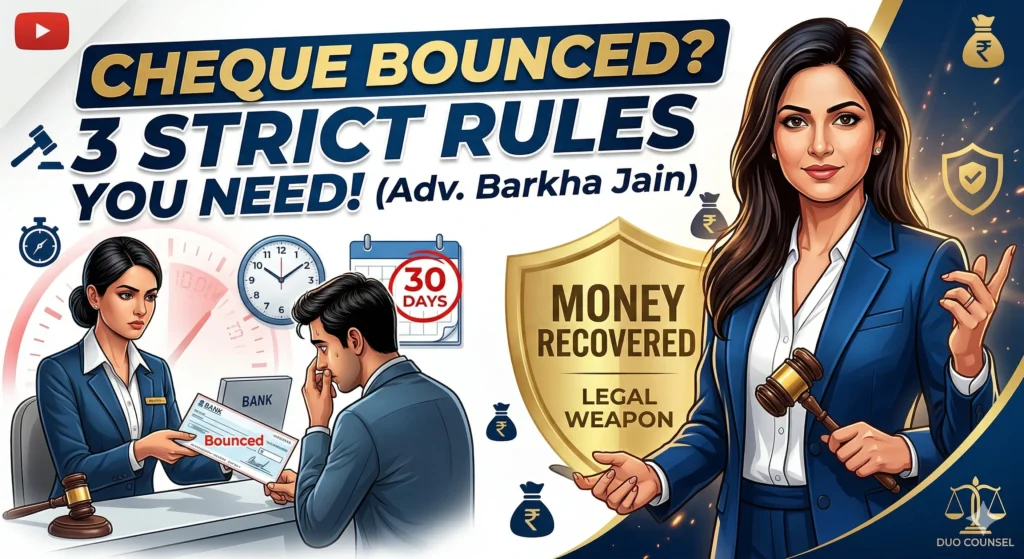
Ek entrepreneur, vendor, ya business owner ke liye sabse frustrating aur financially draining moment kya hota hai? Aapne apna product deliver kiya, din-raat mehnat karke service di, payment ke liye cheque receive kiya, aur achanak bank se “Cheque Return Memo” aa gaya. Aapka hard-earned paisa atak jata hai, cash flow ruk jata hai, aur samajh nahi aata ki ab aage kya legal step lena chahiye. Cheque Bounce Case Process 2026
Ek bounced cheque sirf bharosa todna (breach of trust) nahi hai; Indian law ke under, yeh ek strict criminal offense hai. Cheque Bounce Case Process 2026
Section 138 of the Negotiable Instruments (NI) Act, 1881 ke tehat, kanoon aapko apna paisa recover karne ka ek bahut powerful weapon deta hai. Lekin ek baat yaad rakhna bahut zaroori hai—family courts ya civil suits ke comparison mein, Section 138 timelines ko lekar bahut zyada strict hai. Ek din ki deri (delay) ya ek choti si technical galti aapka pura case court se dismiss karwa sakti hai.
Duo Counsel ki is in-depth, ultimate guide mein, hum exact cheque bounce case process ko simple Hinglish mein samjhayenge. Hum sirf basic timeline cover nahi karenge, balki court ke andar ka trial procedure, nayi 2026 ki Supreme Court guidelines, MSME recovery options, aur aam galtiyan jo aapko avoid karni hain, sab kuch detail mein discuss karenge. Cheque Bounce Case Process 2026
Part 1: Cheque Bounce Kyun Hote Hain? (Technical vs. Financial Reasons) Cheque Bounce Case Process 2026
Koi bhi legal action lene se pehle, yeh janna zaroori hai ki cheque bounce hone ka exact reason kya tha. Jab aap bank mein cheque deposit karte hain aur woh clear nahi hota, toh bank aapko cheque ke sath ek “Cheque Return Memo” deta hai. Is memo par bounce hone ka reason tick kiya hota hai.
In reasons ko do categories mein divide kiya jaa sakta hai: Technical aur Financial.
1. Financial Reasons (Section 138 Applicable)
Agar in reasons ki wajah se cheque bounce hua hai, toh aap immediately Section 138 ka criminal case file kar sakte hain:
- Funds Insufficient: Cheque issue karne wale ke account mein sufficient balance nahi tha. (90% cheque bounce cases isi wajah se hote hain).
- Payment Stopped by Drawer: Jisne cheque diya tha, usne jaan-bujh kar bank ko payment rokne ka instruction de diya (“Stop Payment”). Supreme Court ne clear kiya hai ki ‘Stop Payment’ bhi Section 138 ke andar cover hota hai agar account mein balance nahi tha ya intention galat thi.
- Account Closed: Cheque dene wale ne cheque issue karne ke baad fraud karne ke irade se apna account hi band kar diya.
- Exceeds Arrangement: Cheque amount us limit se zyada hai jo drawer ne bank ke sath arrange ki thi (like overdraft limit cross ho jana). Cheque Bounce Case Process 2026
2. Technical Reasons (Section 138 Not Always Applicable)
Agar in reasons se cheque bounce hua hai, toh aap direct kanooni karyawahi nahi kar sakte. Aapko samne wale se naya cheque mangna hoga:
- Signature Mismatch: Cheque par kiya gaya signature bank ke records se match nahi ho raha.
- Overwriting / Alteration: Cheque par amount ya naam mein overwriting hai aur counter-signature nahi hai.Cheque Bounce Case Process 2026
- Post-Dated Cheque Presentment: Cheque par aage ki date (future date) daali thi, par aapne use time se pehle bank mein laga diya.
- Stale Cheque: Cheque par jo date likhi hoti hai, us date se sirf 3 mahine (3 months) tak hi woh valid hota hai. Agar aap 3 mahine expire hone ke baad bank mein cheque lagate hain, toh woh “Stale Cheque” ban jata hai aur aap Section 138 ka case file nahi kar sakte.
Part 2: Case File Karne Ke Essential Pre-Requisites (Jab case file hi nahi ho sakta)
Har bounced cheque par court case nahi ho sakta. Section 138 invoke karne ke liye kanoon ki kuch strict conditions hain jo meet honi hi chahiye:
- Legally Enforceable Debt: Jo cheque aapko diya gaya tha, woh kisi legal liability ya udhaar (debt) chukane ke liye hona chahiye. Agar kisine aapko “Gift” ke roop mein cheque diya, ya charity ke liye donation di, aur woh bounce ho gaya, toh aap Section 138 ka case file nahi kar sakte. Business transaction, invoice payment, ya personal loan repayment isme cover hote hain.
- Cheque Valid Period Mein Present Hua Ho: Jaise pehle bataya, cheque issue hone ki date se 3 mahine ke andar aapne bank mein deposit kiya ho.
- Legal Notice Time Par Bheja Gaya Ho: Yeh sabse crucial requirement hai, jisko hum aage timeline section mein detail mein samjhenge.
Part 3: The Strict 30-15-30 Day Rule: Cheque Bounce Ka Legal Timeline
Cheque bounce case mein aapka sabse bada dushman ya dost “Time” hai. Court mein din gine jate hain, mahine nahi. Jaise hi bank aapko batata hai ki cheque bounce ho gaya hai, ek countdown timer start ho jata hai.
Is timeline ko dhyan se samajhiye:
Step 1: Bank Return Memo Milna (Day Zero)
Aapne cheque bank mein deposit kiya. Cheque clear nahi hua aur bank ne aapko cheque ke sath ek printed “Return Memo” slip wapas kardi. Is slip ko bohot sambhal kar rakhein; court mein yeh sabse bada evidence hai. Return memo par jo date chapi hai, wahan se aapka Day Zero start hota hai.
Step 2: Legal Demand Notice Bhejna (Within 30 Days)
Aap directly next day court jaa kar judge ke samne case file nahi kar sakte. Kanoon kehta hai ki pehle aapko defaulter ko ek fair warning deni padegi (kya pata unhe pata hi na ho ki account mein balance nahi tha).
- The Rule: Bank se return memo milne ki date se exactly 30 din ke andar, aapko cheque dene wale ko ek formal legal demand notice bhejna hoga.
- Notice Mein Kya Hoga? Is notice mein clearly likha hona chahiye:
- Cheque ka number aur date.
- Kis invoice ya debt ke against cheque diya gaya tha.
- Bounce hone ki date aur bank ka reason.
- Ek strict demand ki “Yeh notice milne ke 15 din ke andar mera paisa wapas karo, warna main Section 138 NI Act ke tehat criminal case file karunga.”
- Drafting Tip for 2026: Hamesha is legal notice ko apne advocate ke through Registered Post (with Acknowledgment Due – AD) ya Speed Post se hi bhejein. WhatsApp ya email notices subsidiary proof hote hain. Speed post ka tracking record court mein proof hota hai ki notice samne wale ko receive ho gaya hai (Presumption of Service under Section 27 of General Clauses Act).
Step 3: Statutory Waiting Period (15 Days)
Jaise hi defaulter ko aapka notice deliver hota hai (tracking report ke hisaab se), kanoon unhe paise arrange karne ke liye 15 din (15 days) ka time deta hai.
- In 15 dino ke dauran, aap court mein case file nahi kar sakte. Agar aapne 14th day par case file kar diya, toh judge case ko “Premature” bol kar dismiss kar dega.
- Agar woh is 15-day limit mein aapko paise de dete hain, toh matter wahi close ho jata hai. Agar 15 din beet gaye raat 12 baje tak, aur unhone paise nahi diye, toh Section 138 ka criminal offense officially complete (cause of action arise) ho jata hai.
Step 4: Court Mein Case File Karna (Within 30 Days)
15 din ka waiting period khatam hone ke baad ab aapke paas legal action lene ka power hai.
- The Rule: 15-day notice period expire hone ke exactly 30 din ke andar, aapko Magistrate ki aadalat (court) mein criminal complaint file karni hogi.
- Agar 30 Din Miss Ho Gaye Toh? Agar aapne deri kardi, toh aapko “Application for Condonation of Delay” file karni padegi, jisme aapko judge ko valid reason dena hoga ki deri kyun hui (jaise medical emergency). Agar judge reason se satisfy nahi hue, toh aapka case dismiss ho jayega.
Part 4: Jurisdiction (Case Kahan File Karein?)
Ek common sawal aata hai ki “Cheque Delhi ki company ne diya, par main Gurugram mein rehta hoon, toh case kahan file hoga?”
Kanoon (Section 142 NI Act) ne iska bahut clear answer diya hai:
- Case us district/city ke court mein file hoga jahan aapka (Payee/Complainant ka) bank branch hai, jis branch mein aapne cheque deposit kiya tha.
- Agar aapka account Gurugram ke HDFC bank mein hai, aur aapne cheque wahi deposit kiya tha, toh case Gurugram District Court mein hi file hoga, chahe cheque issue karne wala poore India mein kahin bhi baitha ho. Us defaulter ko Gurugram court mein pesh hona padega.
Part 5: Court Trial Procedure (Andar Kya Hota Hai?)
Aapne timeline follow ki aur advocate ke through complaint file kar di. Ab aadalat ki prkriya (trial) shuru hoti hai. Ek cheque bounce case summary trial hota hai, lekin fir bhi isme kai stages hote hain:
1. Pre-Summoning Evidence & Cognizance
Complaint file hone ke baad, Magistrate aapke (complainant ke) saare documents check karenge (Original Cheque, Bank Memo, Legal Notice copy, Speed Post tracking, aur aapka Affidavit). Agar documents strong hain aur timeline follow hui hai, toh judge “Cognizance” lenge (case accept karenge) aur accused (defaulter) ko “Summons” bhejenge.
2. Appearance of Accused & Bail (Zamanat)
Summons milne ke baad accused ko us date par court aana hoga. Kyunki Section 138 ek bailable offense hai, court aakar unhe bail bond aur surety (zamanati) deni padti hai.
- Agar accused nahi aaye toh? Agar woh summons ko ignore karte hain, toh judge unke khilaf Bailable Warrant (BW) nikalenge. Agar BW par bhi nahi aaye, toh Non-Bailable Warrant (NBW) issue hoga, jiska matlab police unhe arrest karke court layegi.
- Agar woh lambe samay tak bhagte hain, toh court unhe “Proclaimed Offender” (PO – Bhagoda) ghoshit kar sakti hai (Section 82/83 CrPC), aur unki property attach (zabth) ki jaa sakti hai.
3. Framing of Notice (Section 251 CrPC)
Jab accused court mein present hota hai, toh judge usse puchte hain, “Kya aap apna jurm kabool karte hain?” (Do you plead guilty?). Agar woh “Yes” bol de (jo rare hai), toh case wahi khatam aur saza/fine ho jata hai. Agar woh “No” bolte hain, toh trial aage badhta hai. Cheque Bounce Case Process 2026
4. Cross-Examination of Complainant
Aapne jo statement (affidavit) file kiya tha, ab accused ka lawyer aapse court mein sawal-jawab karega (cross-examination). Unka main maqsad yeh saabit karna hoga ki “yeh legally enforceable debt nahi tha” ya “cheque chori ho gaya tha”. Aapko confidently apne sach par tike rehna hai.
5. Defence Evidence & Statement of Accused (Section 313 CrPC)
Aapki gawahi ke baad, accused se judge direct sawal puchte hain (Section 313) ki aapko apne bachav mein kya kehna hai. Iske baad, accused apne saboot ya gawah pesh kar sakta hai.
6. Final Arguments & Judgment
Dono advocates (aapke aur unke) case ke facts aur kanoon ke hisaab se final bahas (arguments) karte hain. Iske baad, judge apna final faisla (Judgment) sunate hain—ya toh conviction (saza) ya acquittal (bari). Cheque Bounce Case Process 2026
Part 6: Cheque Bounce Ki Saza aur Recovery (Punishment in 2026)
Section 138 ko isliye banaya gaya tha taaki cheques ki credibility market mein bani rahe. Agar accused guilty prove hota hai, toh court yeh saza suna sakti hai:
- Jail (Imprisonment): Accused ko maximum 2 saal tak ki jail ho sakti hai.
- Fine (Zarmana): Court accused par bounced cheque ke amount ka dugna (double) tak fine laga sakti hai.
- Compensation: Jo fine collect hota hai, usme se complainant (aapko) aapka paisa as compensation dila diya jata hai.
The Game Changer: Section 143A (Interim Compensation)
Cheque bounce cases pehle saalon tak chalte the, jisse business owner ka paisa atka rehta tha. Isliye kanoon mein Section 143A add kiya gaya.
Is rule ke tehat, jab accused court mein appear hota hai aur “not guilty” plead karta hai, tabhi aapka advocate application laga sakta hai. Court order de sakti hai ki accused aapko cheque amount ka 20% turant (60 dino ke andar) pay kare as “interim compensation” jab tak case chal raha hai. Agar accused case jeet gaya toh aapko yeh paisa interest ke sath wapas karna hoga, par at least trial ke dauran aapke hath mein aapki recovery ka 20% hissa aa jata hai. Cheque Bounce Case Process 2026
Part 7: Alternative & Faster Recovery Options (Beyond Section 138)
Ek smart corporate lawyer sirf ek raste par depend nahi karta. Agar aapka paisa fasa hai, toh Section 138 ke sath-sath aap aur kya kar sakte hain? (Khas karke agar aap DUO COUNSEL ke SME/Startup audience hain):
1. MSME Samadhaan (For MSME Registered Businesses)
Agar aapki company Udyam (MSME) portal par registered hai aur aapne kisi company ko goods/services diye the, par unhone 45 dino ke andar payment nahi ki (aur sath mein cheque bhi bounce ho gaya), toh yeh aapke liye sabse powerful tool hai.
- Aap MSME Samadhaan portal par online complaint file kar sakte hain.
- MSME Facilitation Council isme involve hoti hai.
- Isme sabse bada benefit yeh hai ki defaulter ko bank rate ka teen guna (3x) compound interest pay karna padta hai.
- MSME ka process civil aur Section 138 ka process criminal—dono parallel chal sakte hain. Cheque Bounce Case Process 2026
2. Order 37 CPC (Summary Suit)
Agar cheque bounce hone ka notice period (30 din) nikal chuka hai aur aap Section 138 ka criminal case nahi kar sakte, toh aap Civil Court mein Order 37 CPC ke tehat “Summary Suit for Recovery” file kar sakte hain. Yeh normal civil cases se fast hota hai kyunki isme cheque apne aap mein liability ka strong proof maana jata hai. Accused ko easily apna defense rakhne ki permission (leave to defend) nahi milti.
3. Section 420 IPC (Cheating & Fraud)
Agar aapko clearly lagta hai ki samne wale ki intention day-one se aapko cheat karne ki thi (e.g., farzi account khola, ya cheque dekar turant account band kar diya), toh aap Section 138 ke sath-sath Police Station mein Section 420 (Dhokhadhadi) aur 406 (Criminal Breach of Trust) ki FIR bhi darj karwa sakte hain.
Part 8: Common Mistakes Jo Aapka Case Kharab Kar Sakti Hain
Corporate litigation mein kayi log choti galtiyon ki wajah se apna laakhon ka paisa kho dete hain. In galtiyon se bachein:
- “Dekh Lenge” Attitude (Missing Timelines): Defaulter aapse bar-bar bolega “Main kal RTGS kar raha hoon, court mat jao”. Is chakkar mein log notice bhejne ki 30-day timeline miss kar dete hain. Yaad rakhein: Legal notice zaroor bhejein; paise aa jayein toh case file mat karna, par notice bhejne ka haq mat khona.
- Kacha Bill / No Proof: Sirf cheque hona kafi nahi hai. Court mein pucha jayega ki “Yeh cheque kis cheez ke paise the?” Aapke paas proper Invoices, Purchase Orders, ya Ledger Account statement hona chahiye jo legally enforceable debt prove kare. Cheque Bounce Case Process 2026
- Galat Address par Notice Bhejna: Agar aapne Legal Notice galat address par bhej diya aur woh return ho gaya, toh notice valid nahi mana jayega. Hamesha company ke registered office address ya vyakti ke sahi current address par notice bhejein. Cheque Bounce Case Process 2026
- Cash Transactions: Agar aapne kisi ko bada amount cash (unaccounted money) mein diya tha aur badle mein usne cheque diya jo bounce ho gaya. Agar aap income tax return (ITR) mein woh loan nahi dikha sakte, toh court mein case weak pad sakta hai. “Unaccounted cash” legally enforceable debt prove karna mushkil hota hai.
- Notice Khud Draft Karna: WhatsApp par “Mere paise de warna FIR karunga” likhna legal notice nahi hota. Notice specific format mein advocate ke through hona chahiye jisme NI Act ki clauses properly invoked hon.
Part 9: Frequently Asked Questions (FAQs)
Q1: Cheque bounce hone par Police FIR kar sakte hain kya? A: Sirf cheque bounce hone par (Section 138) police direct FIR darj nahi karti. Yeh complaint directly Magistrate ki aadalat mein file hoti hai. Haan, agar aapke sath proper fraud/cheating hui hai (intention galat thi), tab aap alag se Section 420 ki FIR kara sakte hain.
Q2: Agar cheque par signature mere samne nahi kiye gaye, aur defaulter bole “Yeh mere sign nahi hain” toh kya hoga? A: Agar signature match nahi hote, toh bank return memo par “Signature Mismatch” likhega. Is situation mein court handwriting expert ko cheque bhej sakti hai. Isliye, koshish karein ki badi payments ke cheques aapke samne hi sign hon.
Q3: Kya ek sath multiple bounced cheques ka ek hi notice bheja jaa sakta hai? A: Haan. Agar ek hi party ke 3-4 cheques bounce hue hain (aas-paas ki dates mein), toh aap saare cheques ka details dekar ek single consolidated Legal Demand Notice bhej sakte hain, aur unhe ek hi court case mein club kar sakte hain (Section 219 CrPC ke niyamo ke anusar). Cheque Bounce Case Process 2026
Q4: Case court mein kitne saal chalta hai? A: Kanoon ke hisaab se cheque bounce case 6 mahine mein khatam hona chahiye. Lekin Indian courts ke backlog ki wajah se, practical ground par ek standard case 1 se 3 saal tak le sakta hai. Isliye 20% Interim Compensation (Section 143A) bahut zaroori ho jata hai.
Q5: Agar company ka cheque bounce hua hai, toh case kispar hoga? A: Section 141 of NI Act ke tehat, case us Company ke khilaf aur un saare Directors/Partners ke khilaf file hota hai jo us waqt company ke business operations ke in-charge the. Cheque sign karne wale Director ko primarily party banaya jata hai.
Part 10: Conclusion & Next Steps
Cheque bounce ka case ladna ek strategic war ki tarah hai. Isme shor machane ya gussa karne se paisa nahi aata; timelines follow karne aur strong document preparation se paisa aata hai. Business owners ko apne processes strong karne chahiye—hamesha proper invoice banayein, payment terms clear rakhein, aur cheque receive karte waqt basic due diligence zaroor karein.
Agar aapka koi cheque bounce ho gaya hai, toh time waste na karein. Aaj hi apna Bank Return Memo dekhein, timeline calculate karein, aur notice prepare karwayein. Ek strong legal notice hi 50% cases ko court court pohochne se pehle settle karwa deta hai, kyunki koi bhi reputed businessman jail jana nahi chahta.
(Aapko apne business ya startup se related cheque bounce, MSME recovery, ya contract compliance mein legal advice chahiye? Duo Counsel ki team aapki help ke liye ready hai.) Cheque Bounce Case Process 2026
About the Author
Adv. Barkha Jain DuoCounsel.com ki Co-Founder aur practicing advocate hain jo Gurugram courts mein active practice karti hain.
Barkha ki primary specialization Corporate Law, Business Compliance aur Commercial Disputes mein hai. Woh startups, SMEs aur established companies ko company incorporation, regulatory compliance, shareholder agreements, mergers & acquisitions, contract drafting, partnership deeds aur commercial litigation mein legal guidance deti hain. Companies Act 2013, LLP Act, FEMA aur corporate governance frameworks ke practical application mein unka hands-on experience hai.
DuoCounsel Podcast ki co-host ke roop mein, Barkha aur co-founder Adv. Yogesh Solanki milke complex legal topics ko simple Hinglish mein samjhate hain — taaki law sirf lawyers ki bhasha na rahe, balki har entrepreneur, business owner aur aam insaan apne legal rights samajh sake.
Credentials:
- Bar Council of Punjab & Haryana — Enrollment No. [BARKHA KA NUMBER]
- Practice: Gurugram District Courts
- Specialization: Corporate Law, Business Compliance, Commercial Disputes, Contract Drafting, Startup Advisory
- Platform: DuoCounsel.com | DuoCounsel Podcast 🎙️ Podcast: duocounsel.com/podcast ▶️ YouTube: youtube.com/@duocounsel 📸 Instagram: instagram.com/duocounsel
Disclaimer: Yeh article sirf legal awareness ke liye hai. Ise professional legal advice nahi maana jaana chahiye. Apne case ke liye kisi advocate se zaroor consult karein.